The Cardiff issue
Grangetown, Cardiff: Ramen in a Bank, Mandi on Clare Road, and the Suburb Nobody Tells You About
Five minutes by train from Cardiff Central, a Victorian dock workers' suburb has quietly become the city's most interesting place to eat.
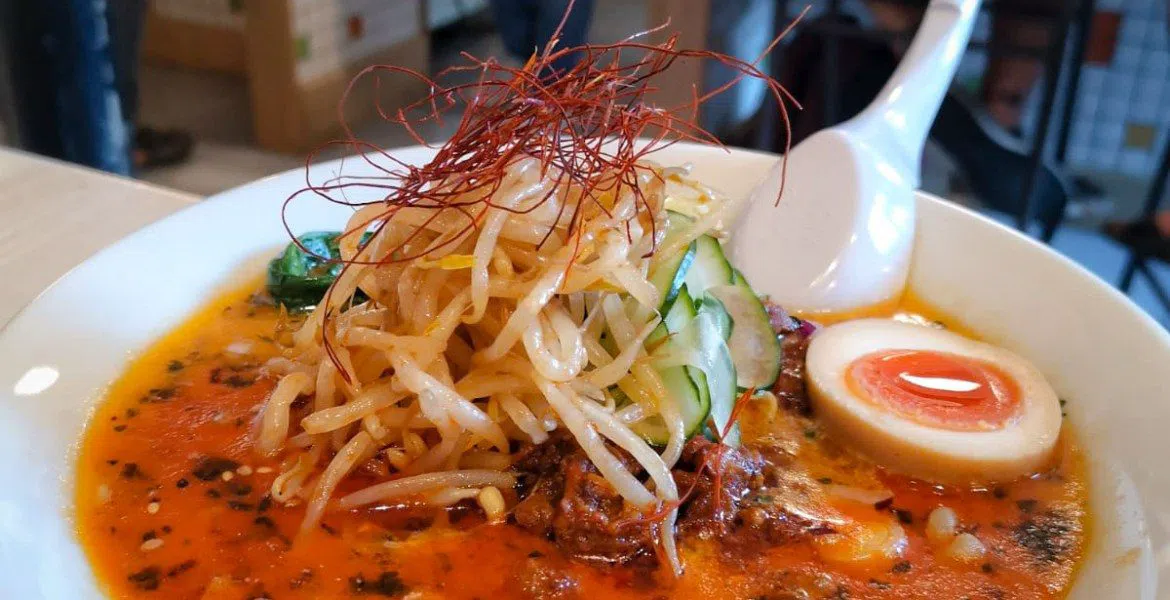
The first train out of Grangetown leaves at around 04:51, and five or six minutes later it is standing in Cardiff Central — barely time to get your coat off. Most visitors to Cardiff never use it. They orbit the castle, the stadium and the Bay, and never cross the few streets south-west of the centre where a Victorian dock workers' suburb has quietly assembled one of the most interesting food maps in Wales. Walk past the Yemeni grocers and halal butchers on Clare Road and you come to a converted 1930s bank serving tonkotsu broth that the food critic Jay Rayner called "inventive, geeky, and superb." That is Grangetown in a sentence: nothing is signposted, everything is ten minutes from everywhere, and the cooking is deadly serious.
Dock workers' terraces, now Cardiff's most mixed postcode
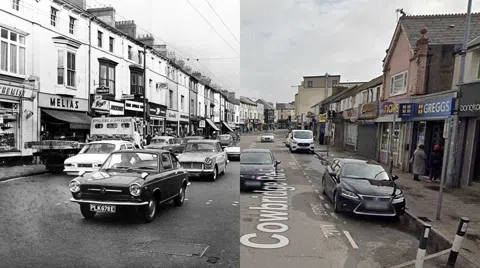
Grangetown was built fast, in the 1880s and 1890s, to house the men loading coal onto ships at Cardiff's docks when the city was shipping the fuel that powered half the world. Speed shows in the layout: long, straight, repeating streets of two-up-two-down red brick, bay windows at the front, back lanes behind, laid out with the unsentimental efficiency of a place built for shift work. The terraces between Clare Road and Corporation Road are largely unchanged. You can still read the logic of the 1890s in them.
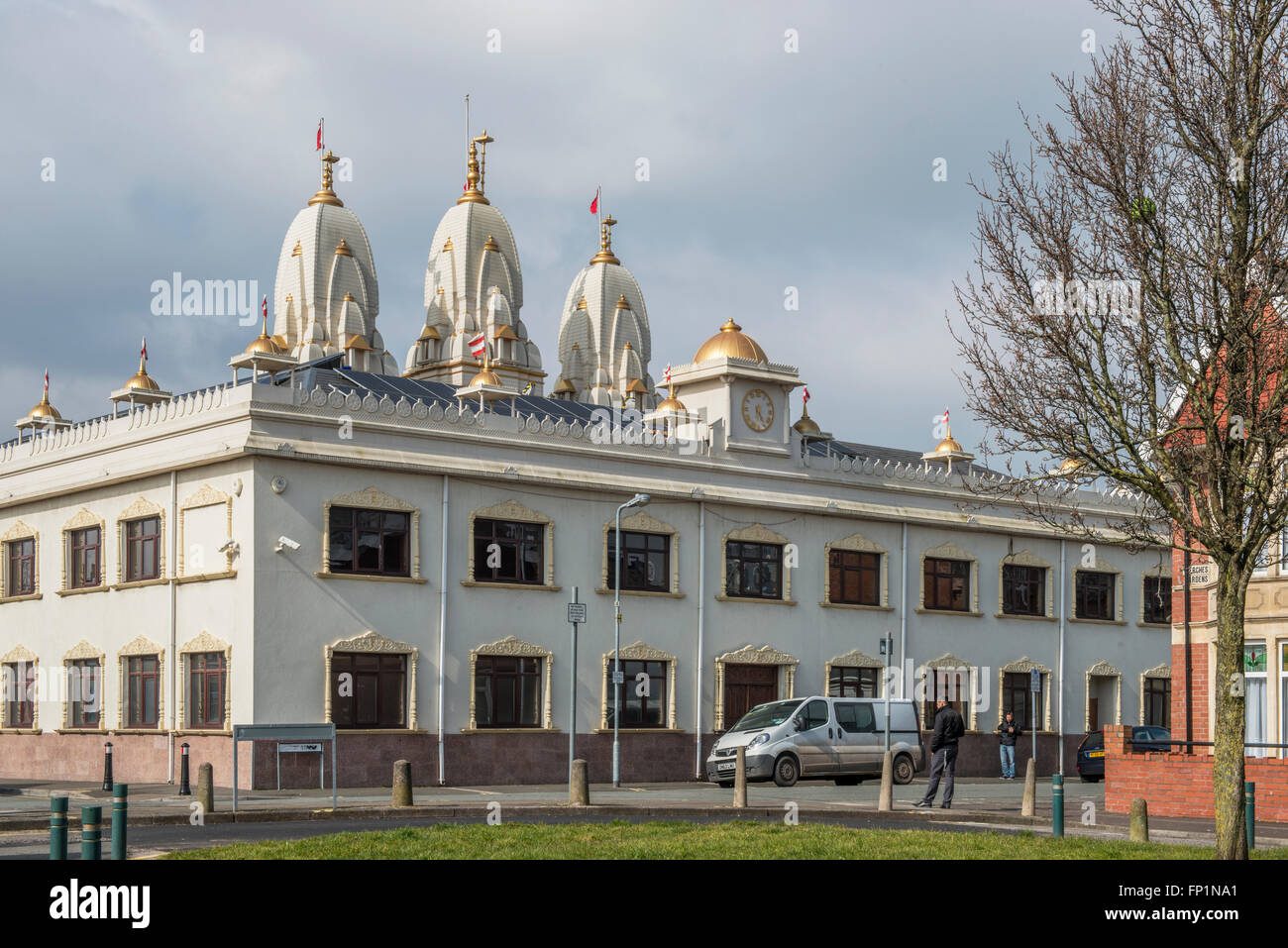
What has changed is who lives inside them. Decades of Somali, Yemeni, South Asian and Caribbean settlement have made this one of the most mixed postcodes in Cardiff, and the evidence is on the shopfronts rather than in any museum: halal butchers next to Italian pizzerias, East African grocers a few doors from a Hindu temple with three white spires. Nothing about it has been curated for visitors. That is precisely the appeal, and also the warning — Grangetown is a working residential suburb, not a polished streetscape, and it does not perform for anyone.
Plan your Cardiff trip
Live prices from our booking partners.
Free cancellation on many rooms. We may earn a commission when you book.
Clare Road and Penarth Road: the real food map
The food here runs along two parallel streets rather than one convenient strip, which is why it takes a little effort and rewards it. Almost none of it is aimed at outsiders. It is cooked for the neighbourhood first, and you are welcome to eat it.
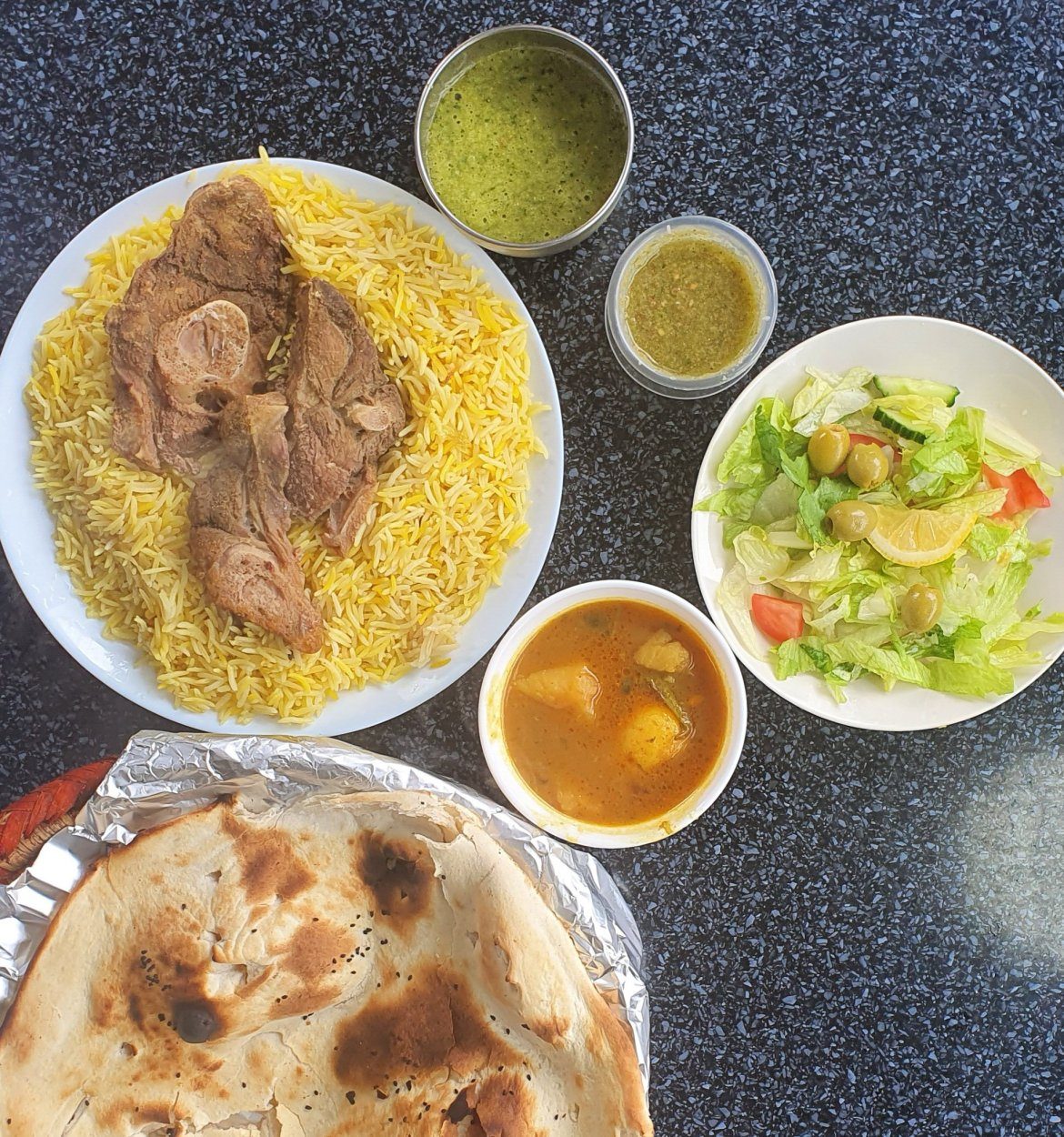
Clare Road is the Yemeni and East African spine. Bab Al-Yemen has sat on it for well over a decade, long enough to be an institution rather than a discovery, and it is where to go for dabeha — lamb slow-cooked until it collapses off the bone — and for chicken out of the tandoor, blistered and smoky at the edges.
Further along, Al-Madina Mandi does the other great Yemeni format: lamb and chicken spiced with hawaij and steamed over rice, so the fat renders down through the grains while it cooks. Mandi is communal food, built for a table of people and a lot of hands, and ordering it for one feels faintly absurd — bring company.
Then there is the bank. Matsudai Ramen took a 1930s banking hall on Clare Road, the kind of building that once had a commissionaire at the door, and turned it into a ramen room. The noodles are made by hand. The tonkotsu is the house argument — rich, patient, properly emulsified — and it is the dish that earned the national write-ups, Rayner's included. It is still, somehow, a ramen counter in a residential suburb in south Cardiff, with buses going past the windows.
Clare Road's non-Yemeni local favourite is Merola's, a well-rated Italian pizzeria that does the unglamorous and genuinely difficult job of being everybody's Friday night. And a short walk away, Le Mandela brings West and Central Africa to the table: jollof rice, fried plantain, smoked goat, cooked by three Cameroonian brothers who run the place together. It is the sort of kitchen where the menu reads like a family argument that was settled amicably.
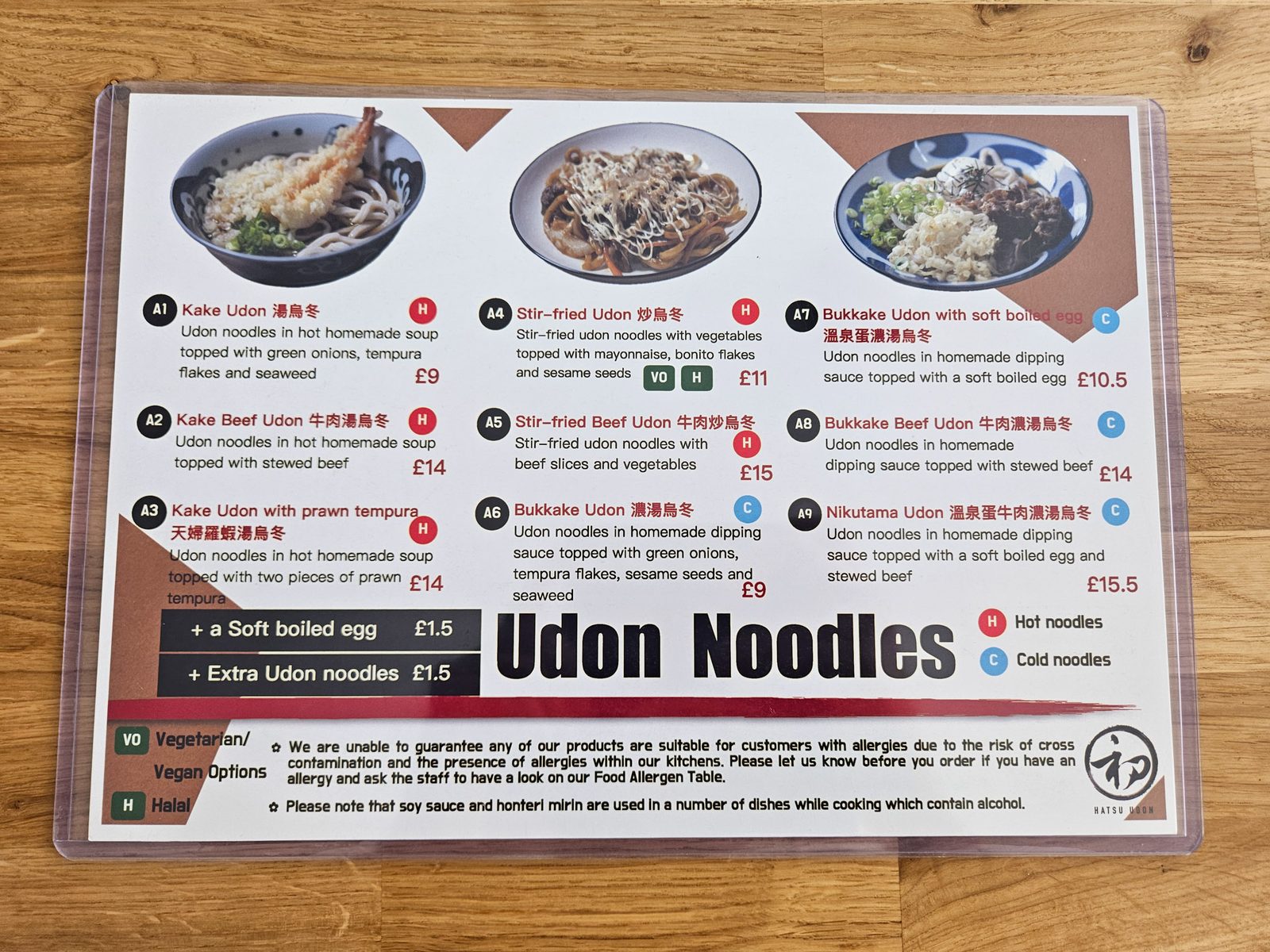
Swing over to Penarth Road and the register changes again. Hatsu Udon is the only dedicated udon bar in Wales — not a sideline on a sushi menu, an actual udon bar — with noodles made fresh daily on machinery imported from Japan. The texture is the whole point: that specific chew that mass-produced udon never quite manages, slippery and resistant at once. On a wet Cardiff evening, and there are many, a bowl of it does more for morale than anything in the city centre.
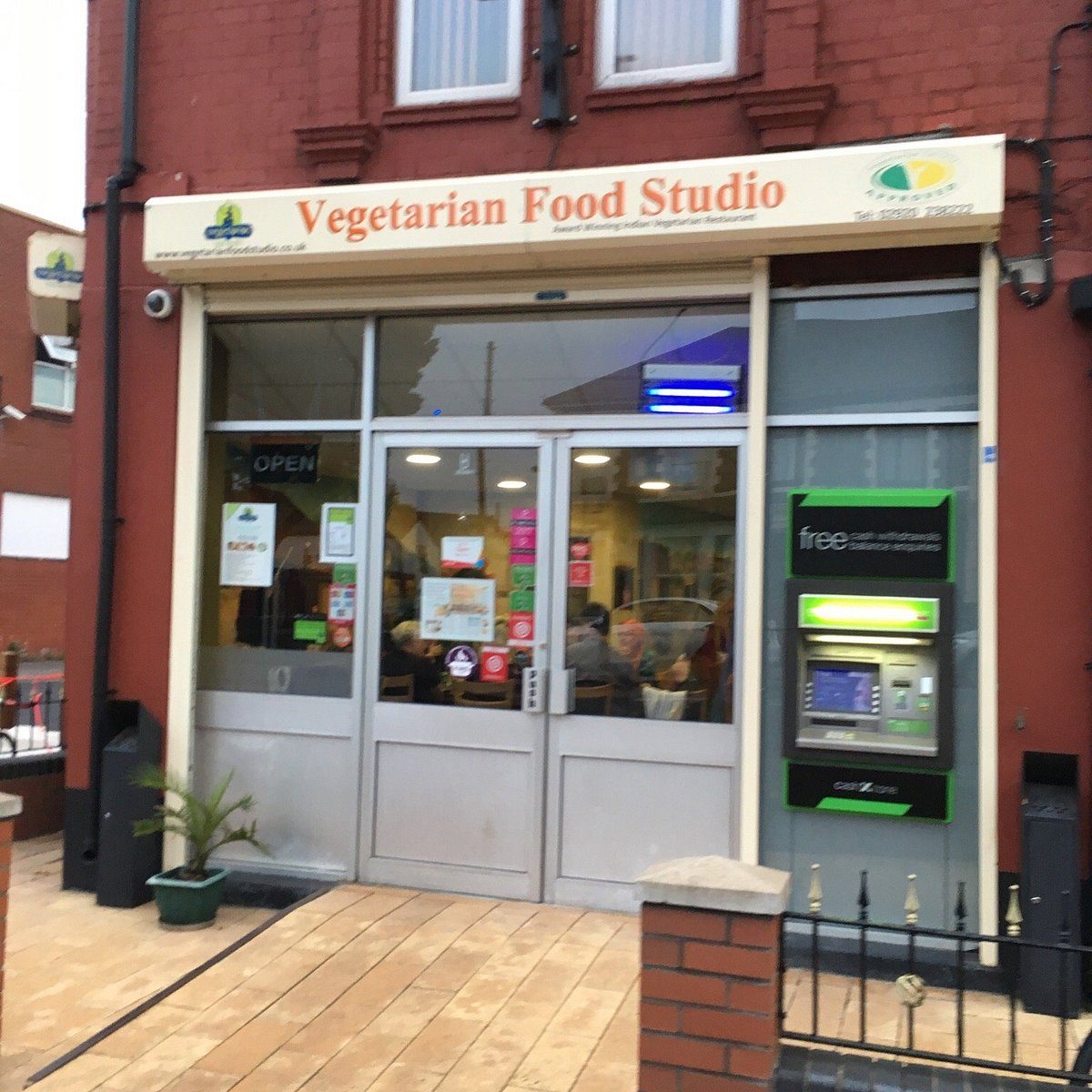
Also on Penarth Road, and older than all of the above, is Vegetarian Food Studio — fifteen years of North and South Indian cooking alongside Indo-Chinese and East African dishes, entirely meat-free, and entirely unbothered about announcing it. Generations of Cardiff students, families and Sunday groups have eaten here. It is the kind of place that quietly outlasts fashions by never having chased one.
Budget here is honest: this is cheap-to-mid eating, with no white-tablecloth dining and no desire for any. You will eat better for less than you would three stops up the line.
One venue, one pub — not a nightlife strip
Be clear-eyed about the evenings. At the turn of the twentieth century Grangetown had something like fourteen pubs, which tells you everything about the thirst of a dock workforce. By the mid-2020s that was down to essentially one. The Grange on Penarth Road — much loved for its GFC fried chicken and its beer garden — closed and began its conversion into flats, which is the fate of a great many Welsh corner pubs and still stings every time.
What survives is The Cornwall, a Brains-tied community local on Cornwall Street: a proper pub, the last one standing, where the regulars have the kind of seating arrangement that is never written down but is universally understood. Go for a pint and a conversation, not for a cocktail list.
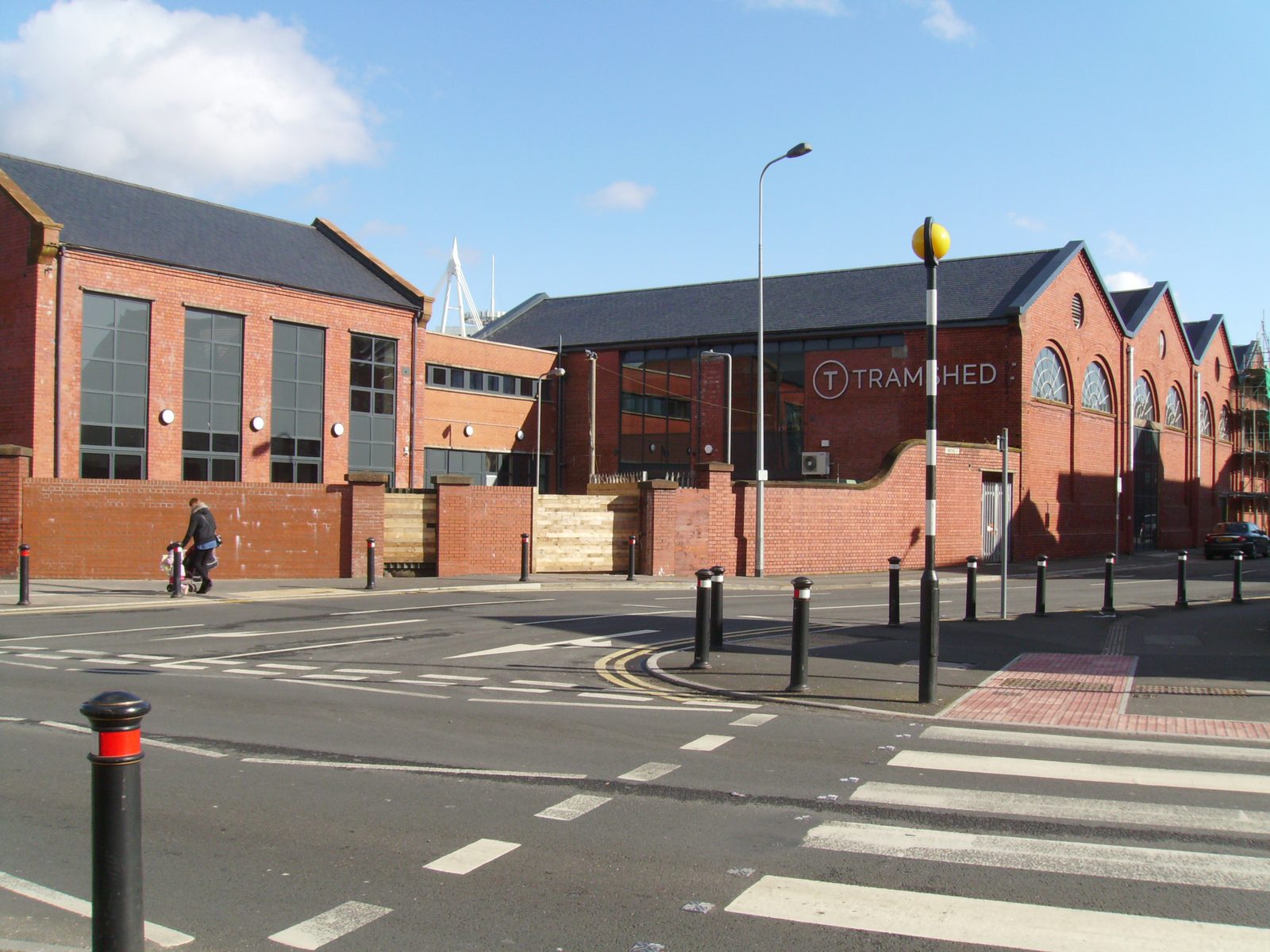
The one genuinely big night out is Tramshed, a Grade II-listed former tram depot on Clare Road that now works as a 1,000-capacity live music venue. The bones of the building — the volume, the ironwork, the sense of a space built for machines rather than people — do a lot of the atmospheric work before a band plays a note. Check what's on before you book your trip; it is the difference between a quiet suburban evening and a very good one.
Otherwise, the city centre is ten minutes away on foot and the last train back runs around 23:43. Plan accordingly, and don't dawdle over the final pint.
Grangemoor Park, the temple, and a walk along the Ely
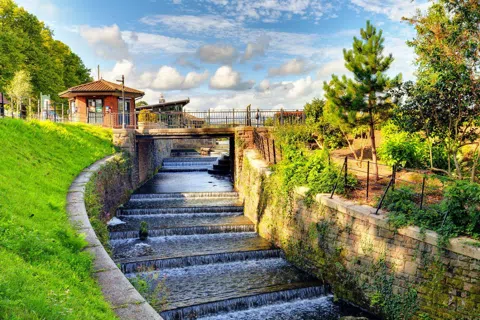
Grangetown's best surprise is a hill that should not exist. Grangemoor Park is a 20-metre mound of grassland, ponds and picnic ground built on top of a municipal landfill that was still operating in 1994. Climb it — it takes minutes — and the whole city lays itself out below you to the south, the kind of panorama Cardiff doesn't advertise because officially it is a rubbish tip with a view. Nature has taken the site over completely; on a bright morning, with the wind coming off the water, you would never guess.
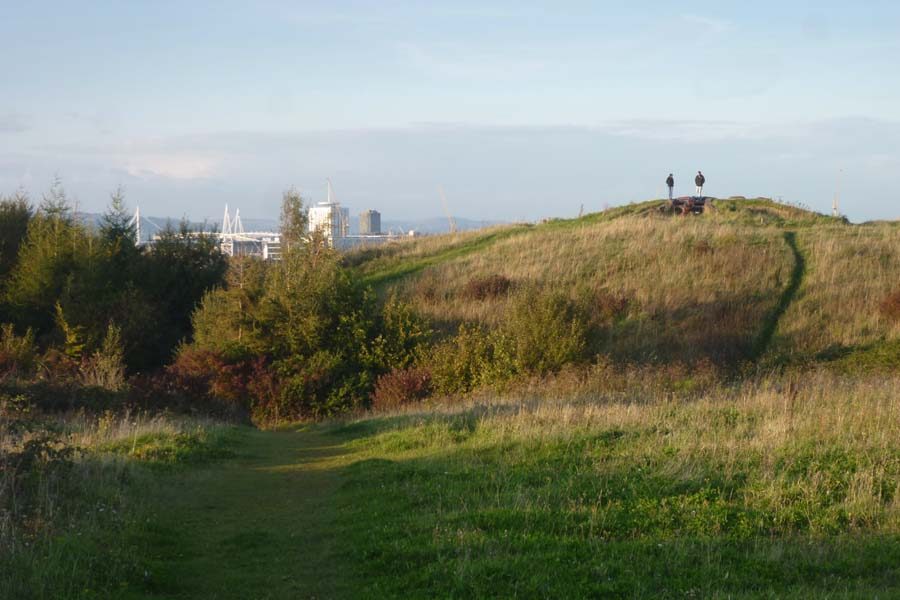
It sits on the River Ely, not the Taff — a distinction locals will correct you on — and the riverside walk is the right way to work off a bowl of mandi.
Back among the terraces, on Merches Place, stand the three white spires of the Shri Swaminarayan Mandir, Wales' first and largest Hindu temple, open since 1982. It is a genuinely striking thing to come upon between rows of Victorian brick, and it says more about the last forty years of this neighbourhood than any plaque could.
Don’t miss in Grangetown
Tramshed
Clare Road
Grangetown Park
Corporation Road's working high street, plus IKEA
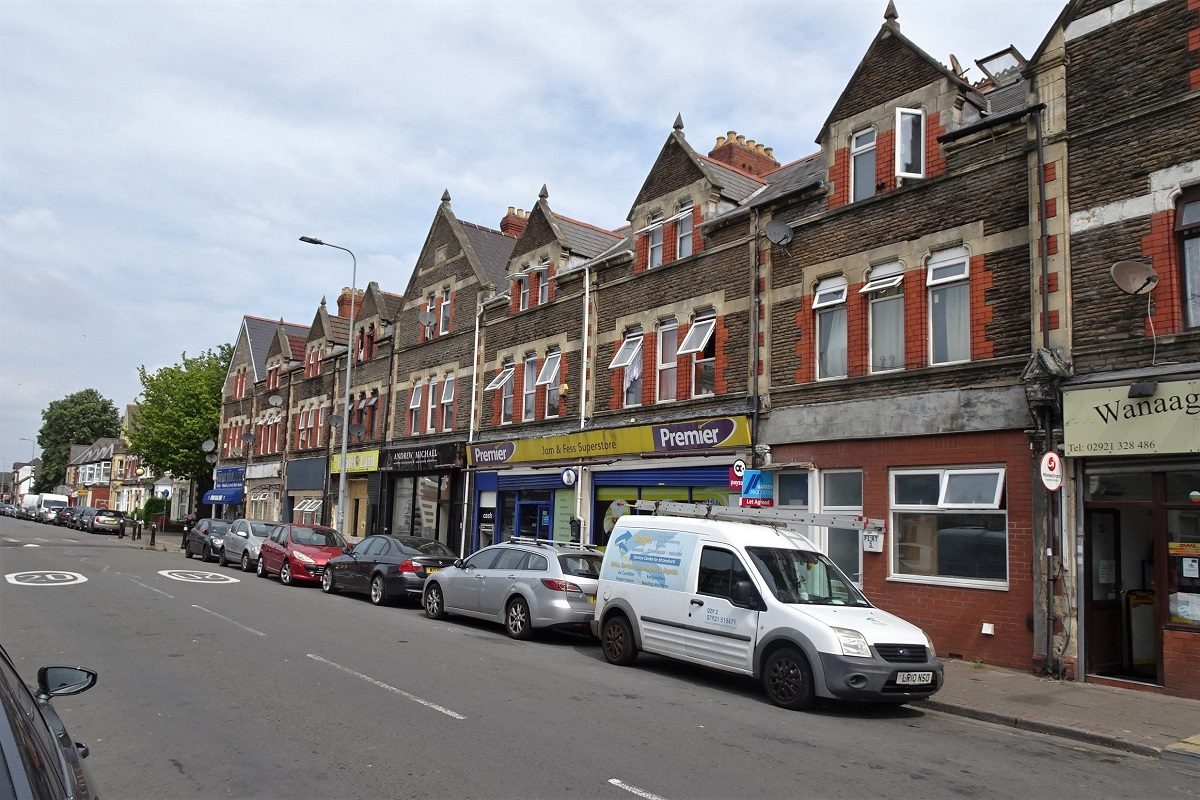
Corporation Road is the real high street — not a retail destination, a functioning one. The foot traffic is constant and local: Somali and Yemeni grocers, halal butchers, a Tesco Express, independents like Jam & Fess Superstore, all of it about ten minutes from the city centre by bus. Shop here the way residents do, for spice blends, bread, produce and the small conversational business of a neighbourhood, and you will understand Grangetown faster than any guided walk would manage.
At the other end of the scale, and the other end of the aesthetic spectrum, there is IKEA — the big blue box being as much a part of this corner of Cardiff as the terraces, and considerably easier to find.
Where to stay in Grangetown
The honest pitch is proximity, not choice. Grangetown has very little dedicated hotel stock, because it is a residential suburb rather than a hotel district, and anything you find here tends to be a guesthouse, a serviced apartment or a budget chain within a ten-minute walk of Grangetown station. For a matchday, that calculus is excellent: you are roughly ten minutes on foot from the Principality Stadium and from Cardiff Central, paying suburban rather than city-centre rates.
Two caveats, stated plainly. The area is quiet after dark, with no nightlife on the doorstep. And the official crime figures put Grangetown at a medium rate for Cardiff — around 131 incidents per 1,000 residents annually, with violence and sexual offences the most commonly reported category, alongside anti-social behaviour. That is ordinary city-suburb territory rather than anything exotic, but it's worth knowing before you book.
Hotels in Grangetown
Our best-rated stays in this neighbourhood. Prices are approximate “from” rates — confirmed at the provider when you continue. We may earn a commission if you book through our partners — at no extra cost to you.
Loading hotels in Grangetown…
Getting around: the fast train station you've not heard of
Grangetown station undersells itself badly. Transport for Wales runs around 145 services a day from here into Cardiff Central, a journey of five to six minutes, with the first train around 04:51 and the last around 23:43 — a span wide enough to cover an early flight connection and a late gig. Walking the same route takes about ten minutes, which is also roughly what it takes to reach the Principality Stadium on foot.
So: trains you'll rarely wait long for, buses along Corporation Road into town in about ten minutes, and a pair of legs that will get you almost everywhere you need. For food-curious travellers, budget-minded rugby and football fans, and anyone who would rather eat brilliantly than sleep expensively, that combination is hard to argue with. Grangetown was built for people who worked hard and ate well. It still is.
Gallery
Grangetown in pictures
Grangetown — your questions
Is Grangetown a good area to stay in Cardiff?
It's a solid budget base if you want to be close to Cardiff Central, the Principality Stadium and some of the city's best-regarded Japanese and Yemeni food — all five to ten minutes away by train or on foot. It is not a nightlife or tourist district: dedicated hotel stock is thin, it's a working residential suburb, and it's quiet after dark.
What's the best food in Grangetown?
Matsudai Ramen on Clare Road, set in a converted 1930s bank, and Hatsu Udon on Penarth Road — Wales' only dedicated udon bar — are the two that draw people in from outside the neighbourhood. For the area's everyday character, Bab Al-Yemen and Al-Madina Mandi on Clare Road serve dabeha and hawaij-spiced mandi, and Vegetarian Food Studio on Penarth Road has been a vegetarian institution for fifteen years.
Is Grangetown within walking distance of the Principality Stadium and Cardiff Central?
Yes — it's about a ten-minute walk to both the Principality Stadium and Cardiff Central station. Grangetown also has its own railway station, with trains to Cardiff Central taking five to six minutes and around 145 services a day.
Does Grangetown have much nightlife?
Very little. The area had around fourteen pubs at the turn of the twentieth century and is now down to essentially one — The Cornwall, a Brains-tied community local on Cornwall Street — after The Grange on Penarth Road closed for conversion into flats. The exception is Tramshed on Clare Road, a 1,000-capacity live music venue in a Grade II-listed former tram depot. Otherwise the city centre is ten minutes' walk away, with the last train back around 23:43.